For our second edition of All in a Day's Work Millie speaks with designer and artist Adam Phillips one half of Foundation Press, ahead of their new exhibition opening on 28 March 2026 at Baltic, Gateshead
January 20th, 2026
Foundation Press, currently based at Baltic Centre for Contemporary Art, are an inspiring multi disciplined duo who work across art, design, education and print, creating beautiful connections between them.
Back in Spring 2025 I attended one of their Riso Social events, a free monthly event at Baltic where you can create and experiment with print on their trusty Japanese Risograph printer. Their studio is head to toe covered in texture, pattern, organic shapes and colour; it's such an uplifting space. I'm a big fan of their zine work and publications especially since the release of: The Quick Fox and the Lazy Dog (BALTIC Newsletter No.17) which took a deep dive into Baltic’s design archive for their 20th anniversary - published in 2022 whilst I worked at Baltic. The broadsheet publication explores Baltic’s iconic design identity and striking visual language and is such a beautiful celebration of design, culture and community.
Their community-focused and collaborative approach to publishing has always stood out to me as authentic and people-driven. It’s something I hope to bring into my own design practice. I’m so grateful to Adam from Foundation Press for sharing his insights and giving a glimpse into what he achieves All in a Day’s Work.
Name: Adam Phillips, Foundation Press
Role: Artist, Designers & Educators
Summary of your work: Myself and my colleague Deborah Bower work as Foundation Press, which is a bit of a hybrid initiative - sometimes we exhibit as artists but we also operate as a design studio, risograph print space and educational art workshop kind of thing. Commonly we find ourselves designing/devising zines, publications, workshops, educational initiatives and printed artworks.
Starting the day
What do you enjoy seeing on your to-do list?
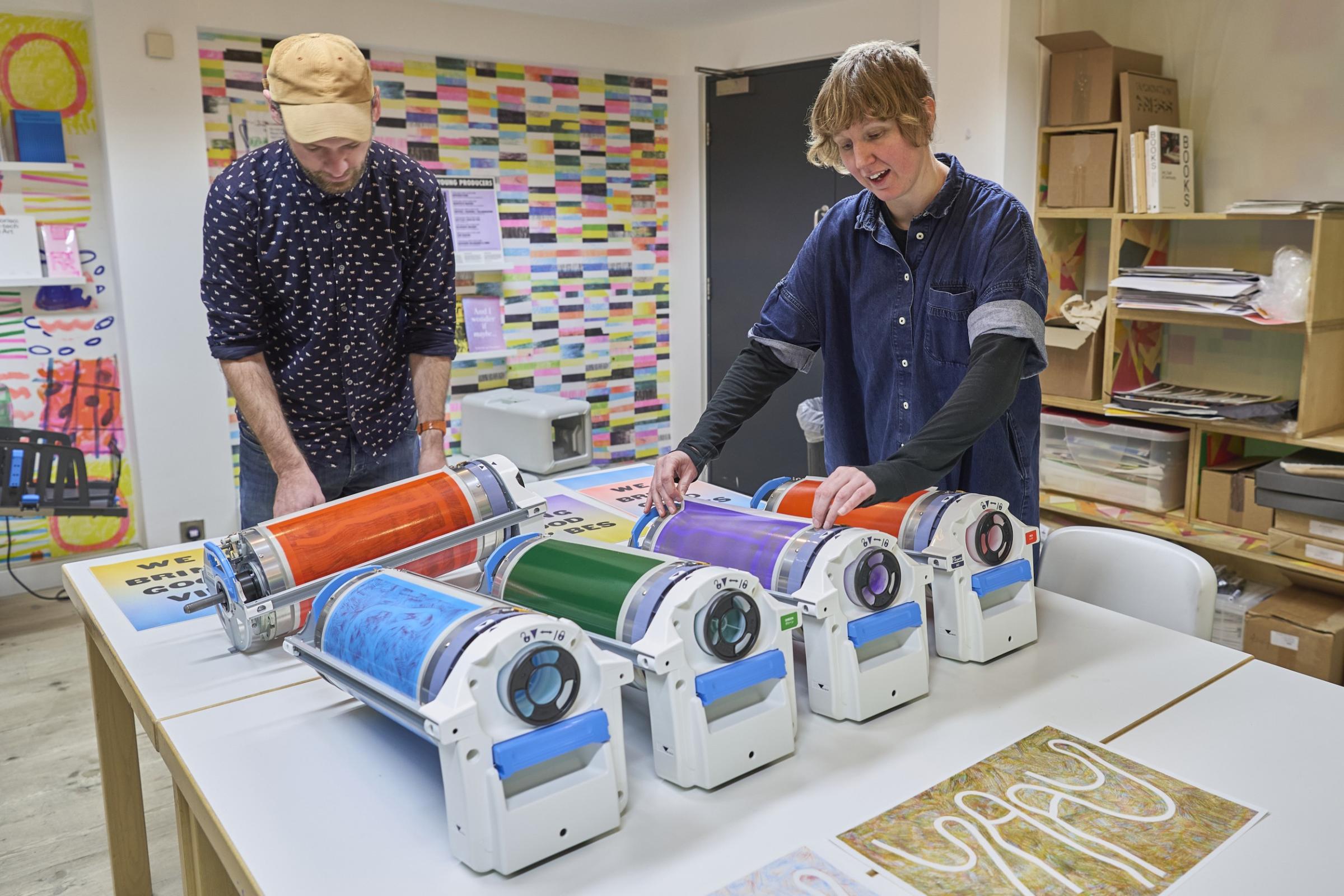
We have used risograph printers as part of our work for the past 10 years or so. They are a very speedy and hands-on way of making a book or poster. Often the days when you are doing a printing shift can be pleasant in its directness (as long as you’ve done your prep – things can go pear-shaped otherwise). On a good day, it’s quite a heads down, working through a list type of job where you get the satisfaction of gradually creating something layer by layer, page by page. It’s the sort of work where you can put your headphones on.
Any simple moments of design joy on your morning commute?
Any opportunity to walk is appreciated. There’s just more chance of seeing unexpected things. On my commute I get to indulge my interest in the patterned bridges between Dunston and Gateshead, that were made for the Gateshead Garden Festival in 1990. They were designed by Jennie Moncur, an artist celebrated for their tapestry work. I think there’s over 20 of them scattered around. Naturally they look quite tatty now 35 years later, but I admire the scale of the project and the application of pattern to such solid, grey and overlooked infrastructure. I keep spotting ones I’d not seen before.
What in your studio / space inspires you?
Cheesy as it sounds, it’s really nice to not work alone – being part of a collaborative group means problems are shared, ideas are expanded, people bring unexpected things into play – so I think my colleague Debbie helps keep me on my toes for sure. Maybe an alternative answer in terms of the studio – we spend a lot of time testing out different pens, pencils, drawing and printmaking tools – it’s nice to be nerdy with materials and spend time working in an analogue way. A lot of the time design is just small tweaks to similar processes. We try to start some studio days with creative tasks which remind you of why we do the sort of work we do. It’s very easy to leap straight to the admin which can be soul-crushing at times.
Foundation Press, Studio Portrait at Baltic Centre for Contemporary Art
The working day
Why are you based in the North & is it important to what you do?
Sometimes it’s hard to remember why you are based where you are but it’s certainly important to what we do. We both have families here and are really rooted in the north. But whilst from one angle that might seem restrictive, we view it really positively - we dig down into the region, we build new collaborations and sometimes we get to work repeatedly with the same collaborators but in different ways. We prioritise work with community groups and cultural organisations so it feels nice to be more connected to where we live through our work. Sometimes we work hyper-locally, for example Debbie has a project called TRIANGLE KIDS, which is an art club in a playground at the end of her street. At other times it’s nice to span the region and push the boundaries of ‘home’ – we’ve had big projects in Durham, Middlesbrough, Berwick, etc.
Who do you work with in the North?
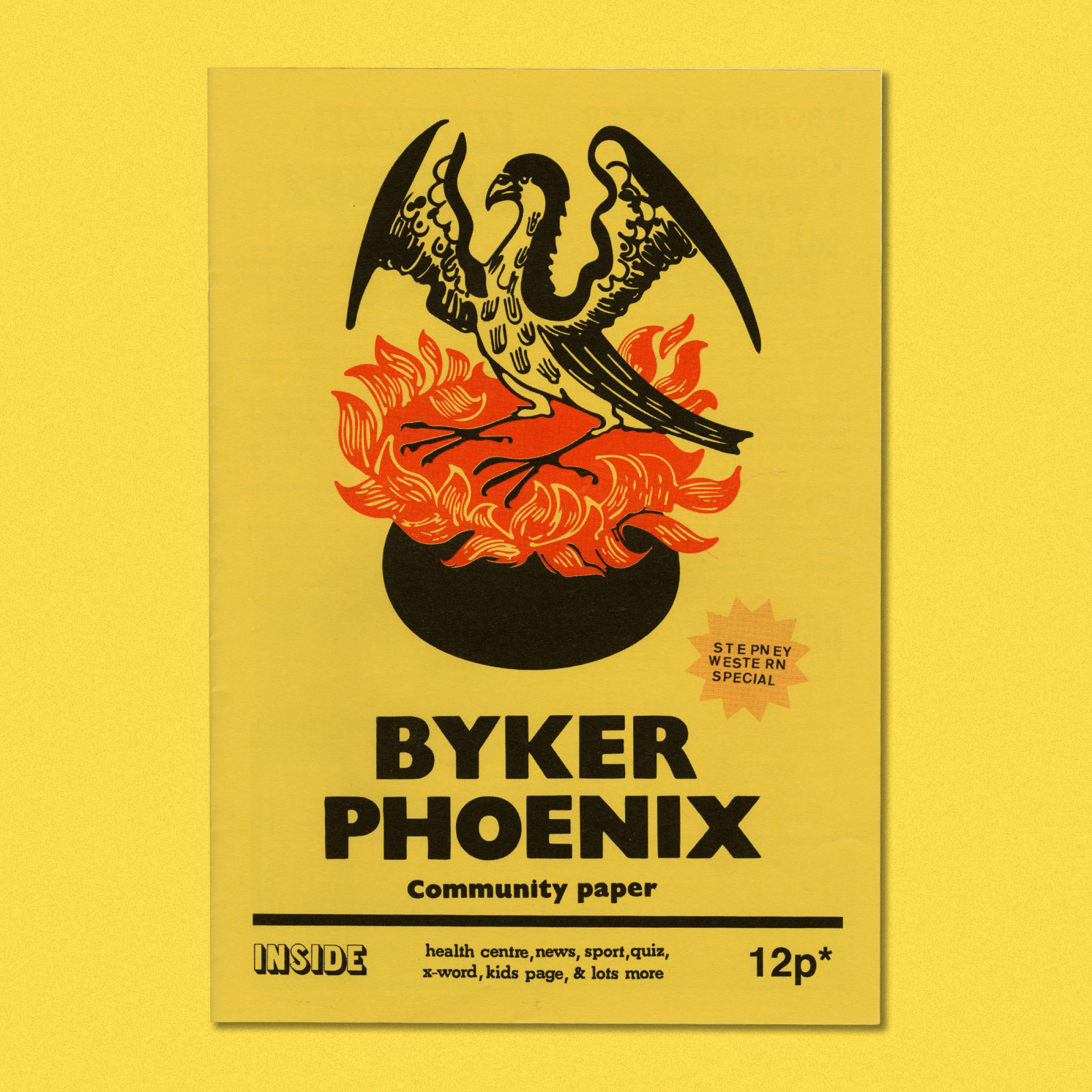
We prioritise working with community groups/charities and cultural spaces. We hope through our work we support good initiatives and good things to happen. We also like to work with the wider public through doing regular workshops, for example we currently put on free riso sessions on the first Friday of the month at Baltic. We also stemmed out of the North East’s Fine Art/Contemporary Art scene - so often we work with artists too, for example devising a new publication or piece of print. Saying this, we are always hoping to open up unexpected collaborations as that is what keeps us on our toes. Recently we made a publication of collages with people connected to organ transplantation and donation, we made a zine with design legend Margaret Calvert about the typeface on the Tyne & Wear Metro and we worked with the artist Harry Lawson to make a celebratory issue of the amazing (and sadly now defunct) community magazine Byker Phoenix. Next up we are doing an exhibition at Baltic called Starting Lines, which will involve a lot of collaborations with different people but bringing those together in one show.
What do you think is the current state of the creative industry in the North?
There’s always good stuff happening and there’s always things to be surprised by. There’s also always things being lost or stopping - funding has been tight for so long it’s hard to say if it’s getting worse, better or staying the same. It’s all relative. But certainly this part of the world requires people to be pretty savvy to survive, whether that’s economically, socially or creatively.
Harry Lawson with Foundation Press, Byker Phoenix Stepney Western Special, Risograph printed booklet, 2025
End of the day
Where do you find community and connection outside of work?
A while back I moved outside of the city and had kids - so I barely get into town anymore! But our work gets us meeting people across the region in all sorts of different places and that’s always really nice - we get to be guests in a lot of wonderful communities.
What does a satisfyingly complete day look like?
We are always juggling multiple projects and ideas, which makes it hard to find satisfaction as there is always something you could be doing or thinking about. So the idea of a ‘complete’ day feels really rare. But normally it is a day where you feel you’ve made real progress with something. It might be getting a book back from the printers or a big workshop but it can also just be a day in the studio where you feel like you’ve cracked a problem or something that was worrying you. I try not to work at night unless I need to - but often if I am working late it’s because I’ve hit upon a creative idea that I’m interested in. I want to see where it goes. Which makes it sometimes hard to stop and go to bed.
At the end of the day what are you looking forward to?
Going on holiday? Ha. It’s always hard to find time and space, so actually it’s great when you’ve just finished a project and have a short break before the next thing. It’s like you’ve got ahead a tiny bit and this allows a precious little bit of respite. There’s like a sweet spot before you start to feel restless and need to get on with things. Having kids is exhausting and massively affects your time and energy, but spending time with kids can also be brilliantly escapist. My kids don’t care what work I’m doing or what deadlines I have.
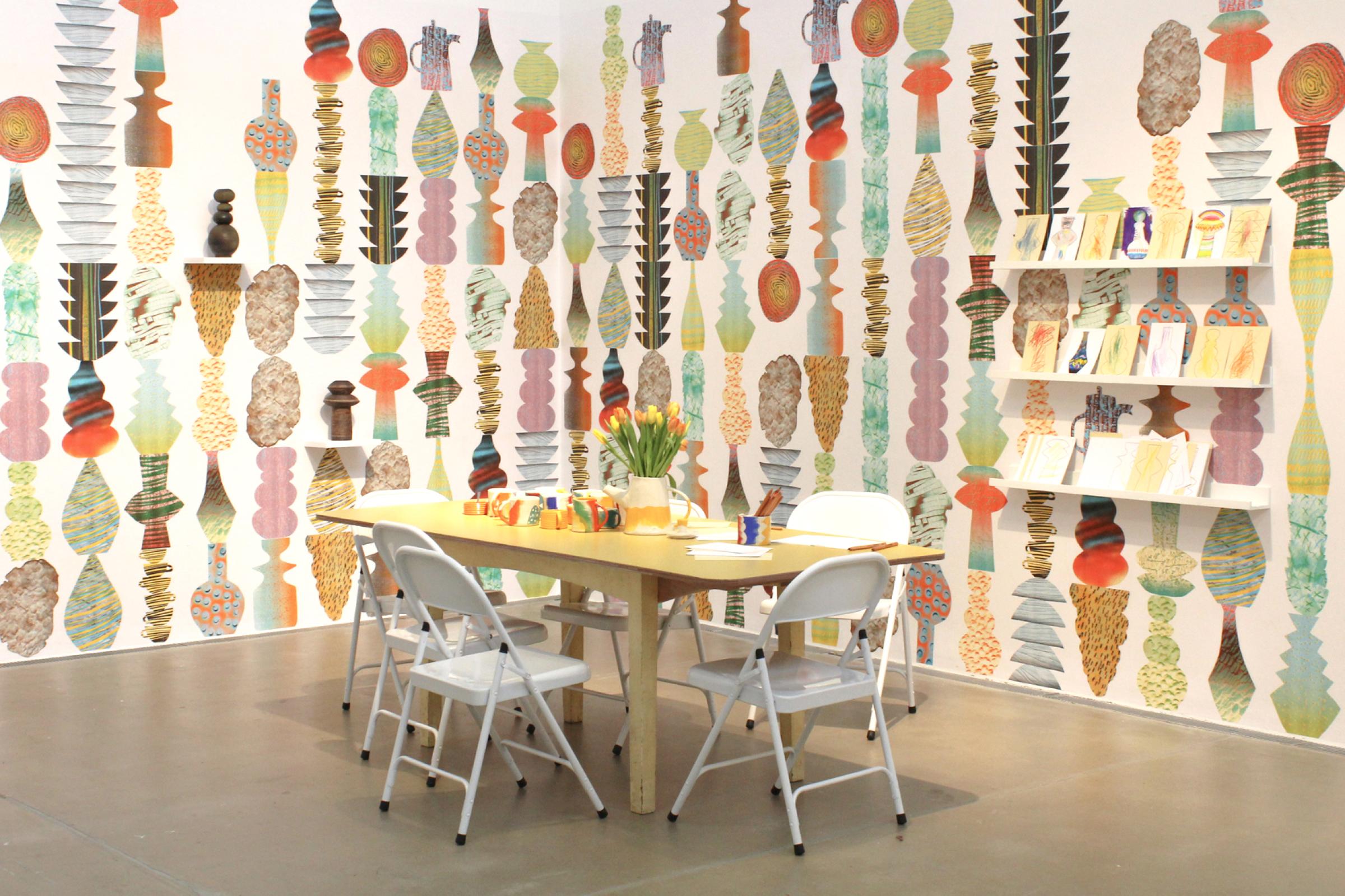
Foundation Press, Imaginary Vessels (For Sally), Installation at NCA Newcastle, 2023
Day after day:
What symbolises the North for you?
I can’t say it’s just one thing. I love going up to Housesteads Fort on Hadrian’s Wall and just feeling like you’re on the periphery. The north is brilliantly out on its own in some ways and maybe that’s a place that reminds me of that fact. You’re literally feeling a wildness, an unruliness and that you're at the edge of something.
What are you watching on telly?
Sometimes designing things or making things can be very repetitive, sometimes so much I find I actually watch movies whilst working (apologies cinephiles). I personally struggle with long TV series so tend to prefer watching films. I like the self-contained-ness of movies, if that makes sense. I can’t say my taste is anything special but my main go to whilst working is Get Back where The Beatles just chat nonsense whilst working - I could have it on repeat. Film wise I loved the Latvian animation Flow, it’s mesmerising and something adults and kids can be entranced by. The fact it was made in Blender is astounding too.
A piece of everyday design that you adore?
A piece of everyday design that you adore? As mentioned, I don’t get out much so objects relating to time with kids is my thing recently. Children’s books by David McKee, Shirley Hughes, The Provensons, Bruno Munari. Enzo Mari’s toys are beautiful but probably too expensive to be classed as ‘everyday’. Recently we’ve been enjoying the PokPok app which is full of detail to be enjoyed.
Foundation Press’s use of print to give a physical, tactile finish to their work with community groups and cultural organisations is such an inspiring principle. It means each project has a long life span, creating something lasting that others can hold, share, and learn from. I look forward to their 2026 exhibition at Baltic, their first major solo exhibition which presents the communities and groups Foundation Press have worked with over the years as both artists and designers.
Adam’s keen eye for design rooted in the region is clear, especially in his appreciation for Jennie Moncur’s bridge commissions. The twenty patterned bridge murals have become iconic, yet so subtle now that they’ve woven themselves into the everyday. I see several of them on my morning commute driving into Gateshead and even though I only briefly drive past I always admire them. This same appreciation for the North East’s design heritage is echoed in their Margaret Calvert Metro commission celebrating the iconic typeface, way finding signage and visual identity of the Metro - elements that are so ingrained in North East daily life, yet carry such powerful cultural iconography for the region.
I love that Foundation Press are unpacking and breaking down ideas and culture through analogue design and print with community at the heart. Their style is authentic, striking and perfect for storytelling. Thank you to Adam (and Debbie) for taking part in the interview for the second edition of All In A day's work. Check out their Instagram here.
Thanks for reading, stay tuned for the upcoming editions of All in a Day's Work by Millie Jobson
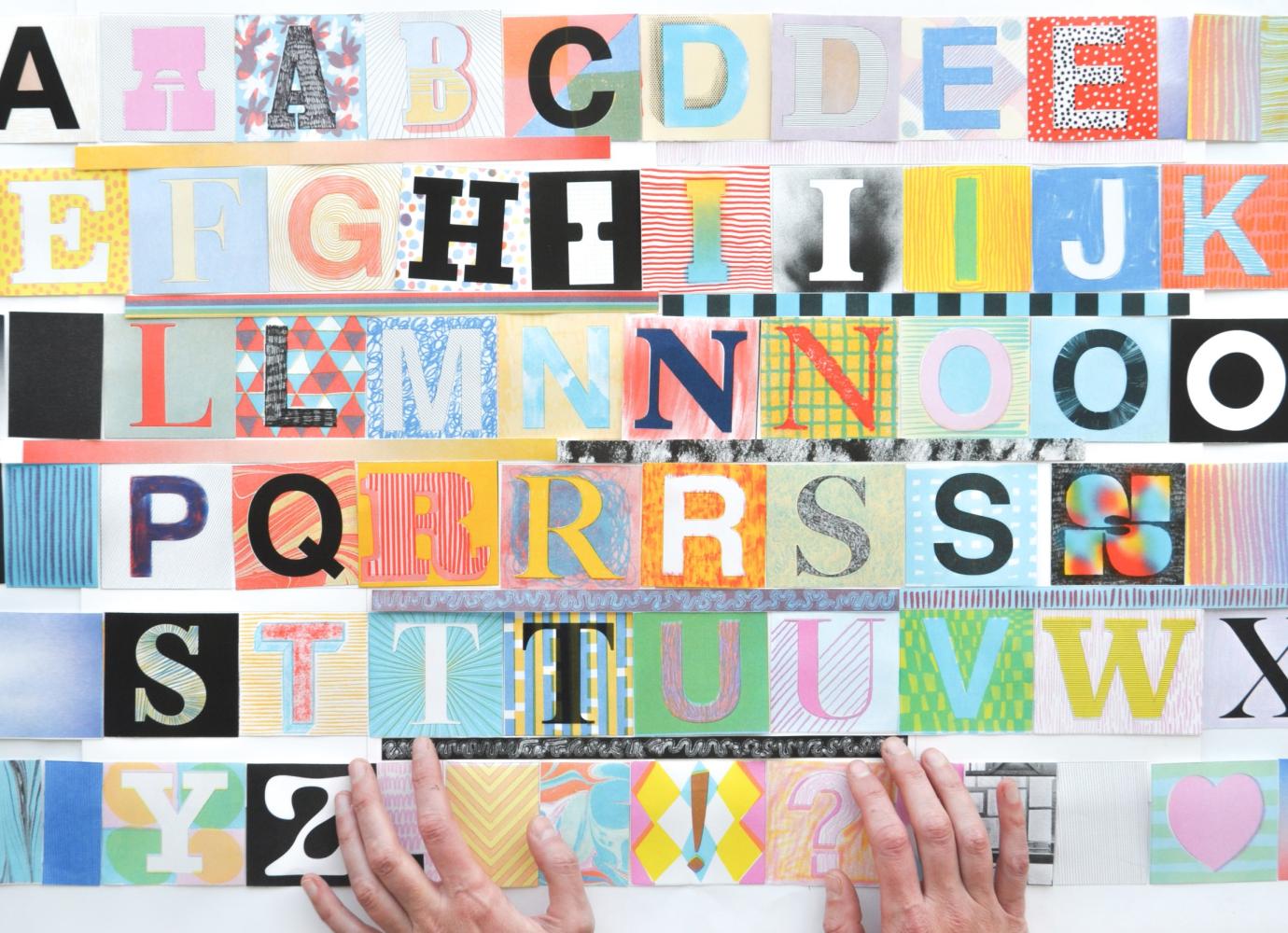
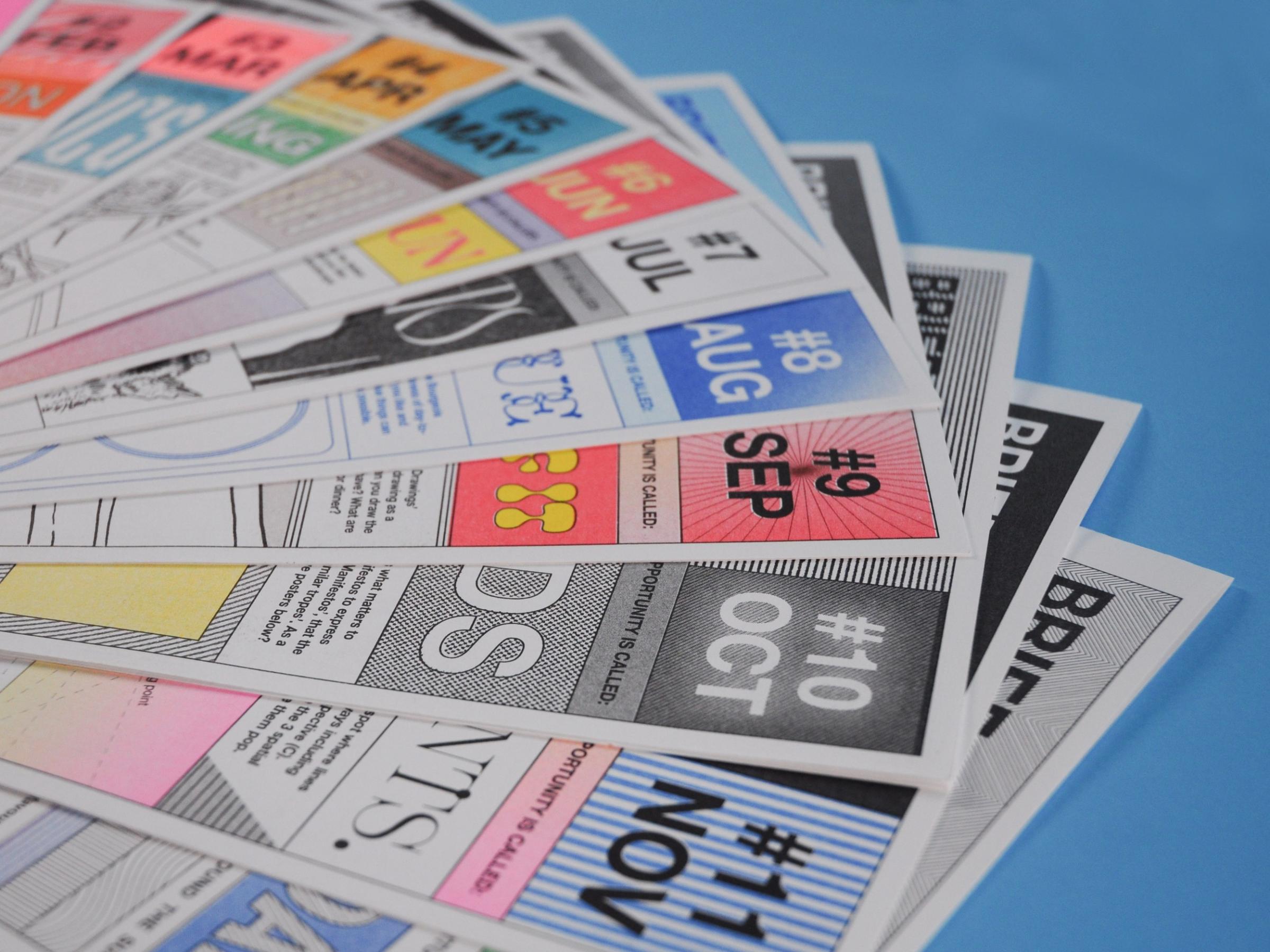
Foundation Press, Brief Opportunity, Risograph printed worksheets for Baltic Centre for Contemporary Art
Sign up for our newsletter and discover what's happening in the Northern creative scene!
Our use of cookies
We use necessary cookies to make our site work. We'd also like to set analytics cookies that help us make improvements by measuring how you use the site. These will be set only if you accept.
For more detailed information about the cookies we use, see our Cookies page.
Necessary cookies
Necessary cookies enable core functionality such as security, network management, and accessibility. You may disable these by changing your browser settings, but this may affect how the website functions.
Analytics cookies
We'd like to set Google Analytics cookies to help us improve our website by collecting and reporting information on how you use it. The cookies collect information in a way that does not directly identify anyone. For more information on how these cookies work please see our 'Cookies page'.