Vincent Walden first came across Northern Design Festival through a post on Creative Boom. He reached out to co-founder Toni in the festival's earliest days, before it even had a venue, and offered the kind of support that money can't buy: time, enthusiasm and a deep-seated belief in what NDF was trying to do.
That was the beginning. In the years since, Vince has gone from being a personal supporter under his own studio, Studio Walden, to the driving force (alongside his colleagues Damon Mahoney and Billy Harkcom) behind involving the University of Cumbria (UoC) as an official sponsor. The university now runs a hands-on letterpress workshop at the festival each year, and for Vince, it's become one of the highlights of the calendar.
Here’s what he had to say…
A Northern Thing, in Every Sense
For Vince, supporting NDF is personal as much as professional. Lancaster, where the festival is based, is his hometown, and the University of Cumbria's Brampton Road campus in Carlisle, where he teaches, is where he studied. He has roots here, and that matters.
But the reasons go beyond hometown pride. Vince sees NDF as part of a broader, necessary shift in how the creative industry thinks about geography.
"Design exists outside of London, we all know that. But now we have to say it exists outside of Manchester too, because that boundary keeps moving north. There's so much going on, and NDF helps make that visible."
It's a point that connects directly to this year's festival theme of heritage: not just the heritage of craft and making, but the heritage of place, and what it means to build something lasting in the North rather than leaving to find it elsewhere.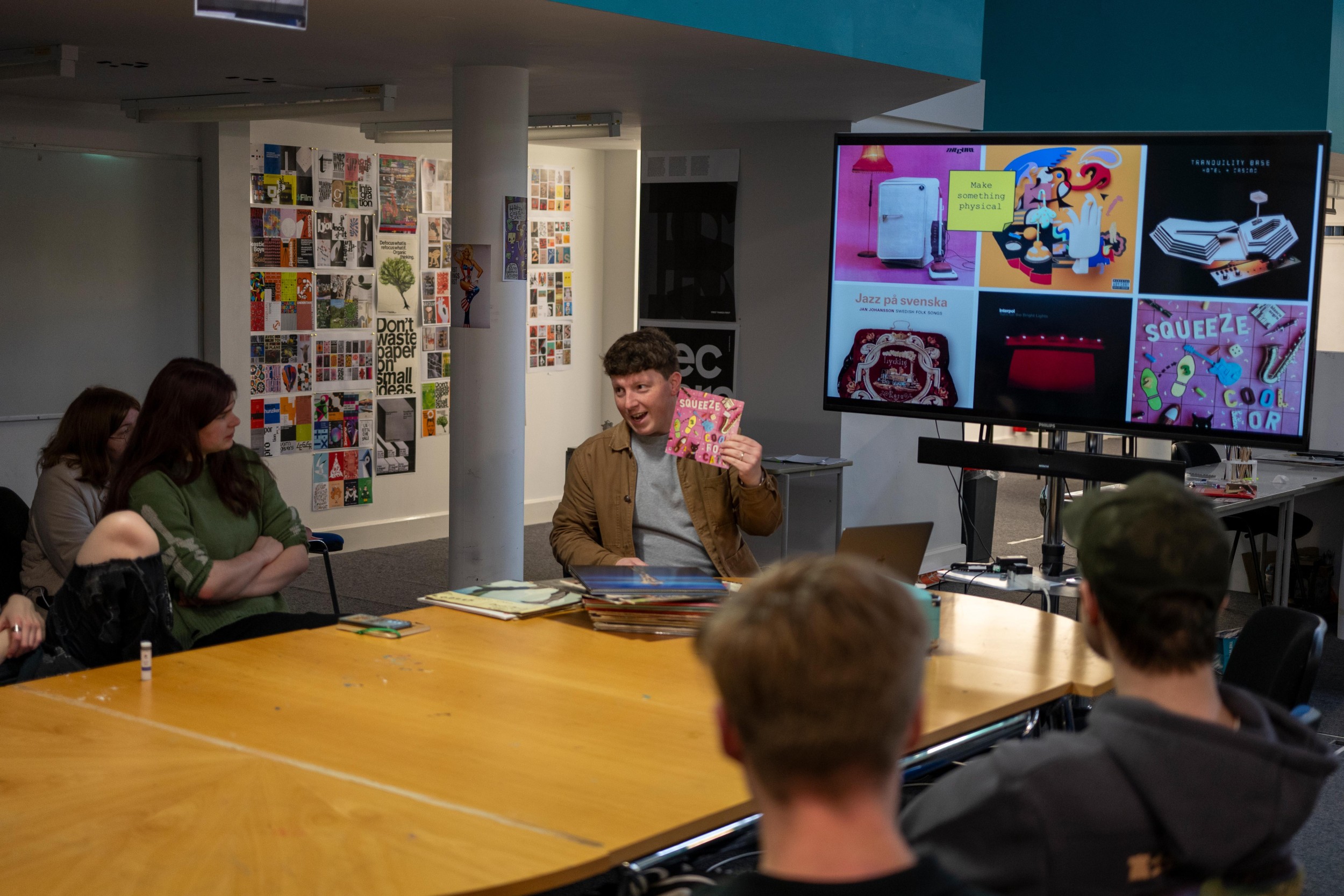
The Workshop: Getting Your Hands Dirty
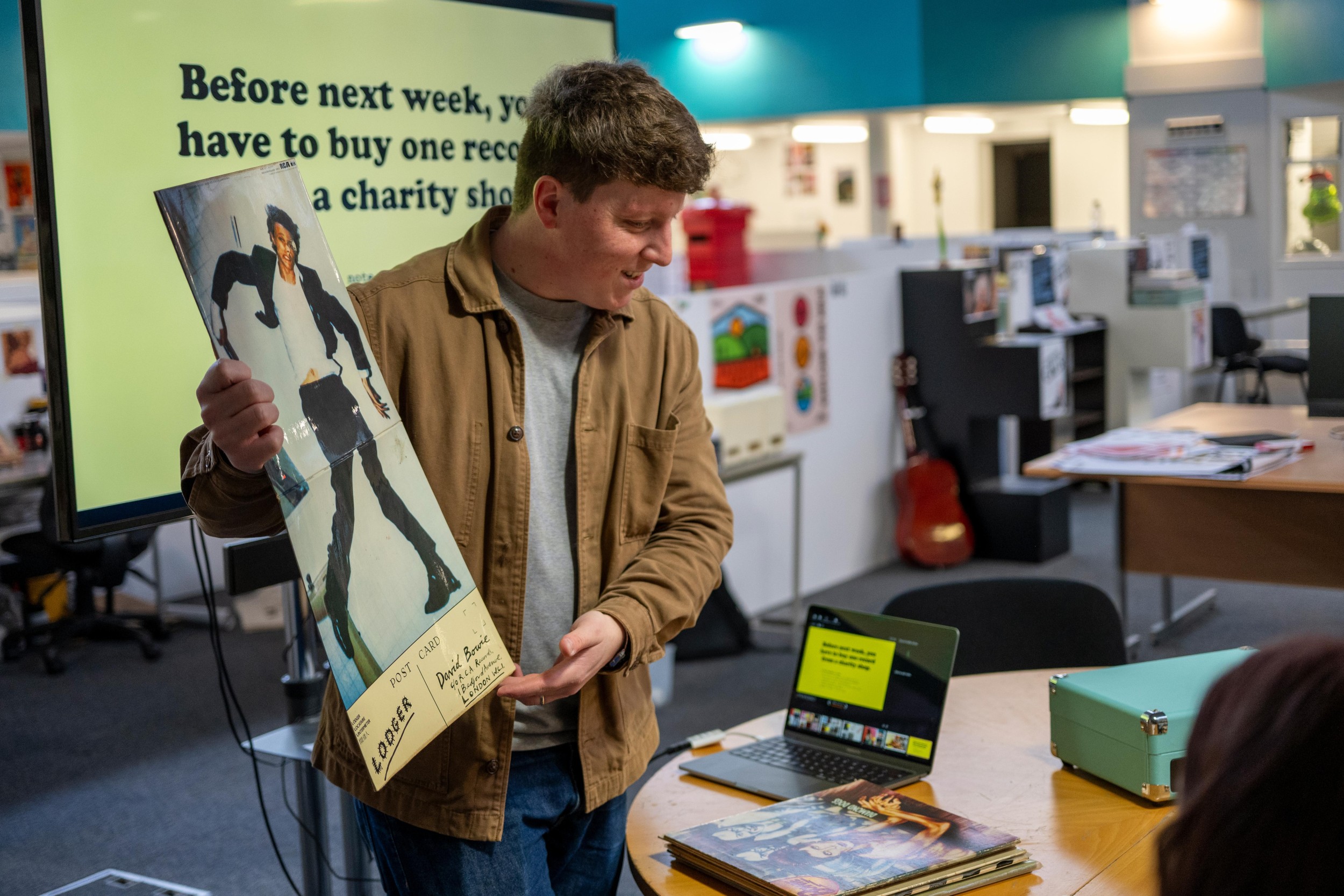
The University of Cumbria's letterpress workshop is one of NDF's most popular hands-on experiences, and it's a direct expression of what Vince believes design education should be about.
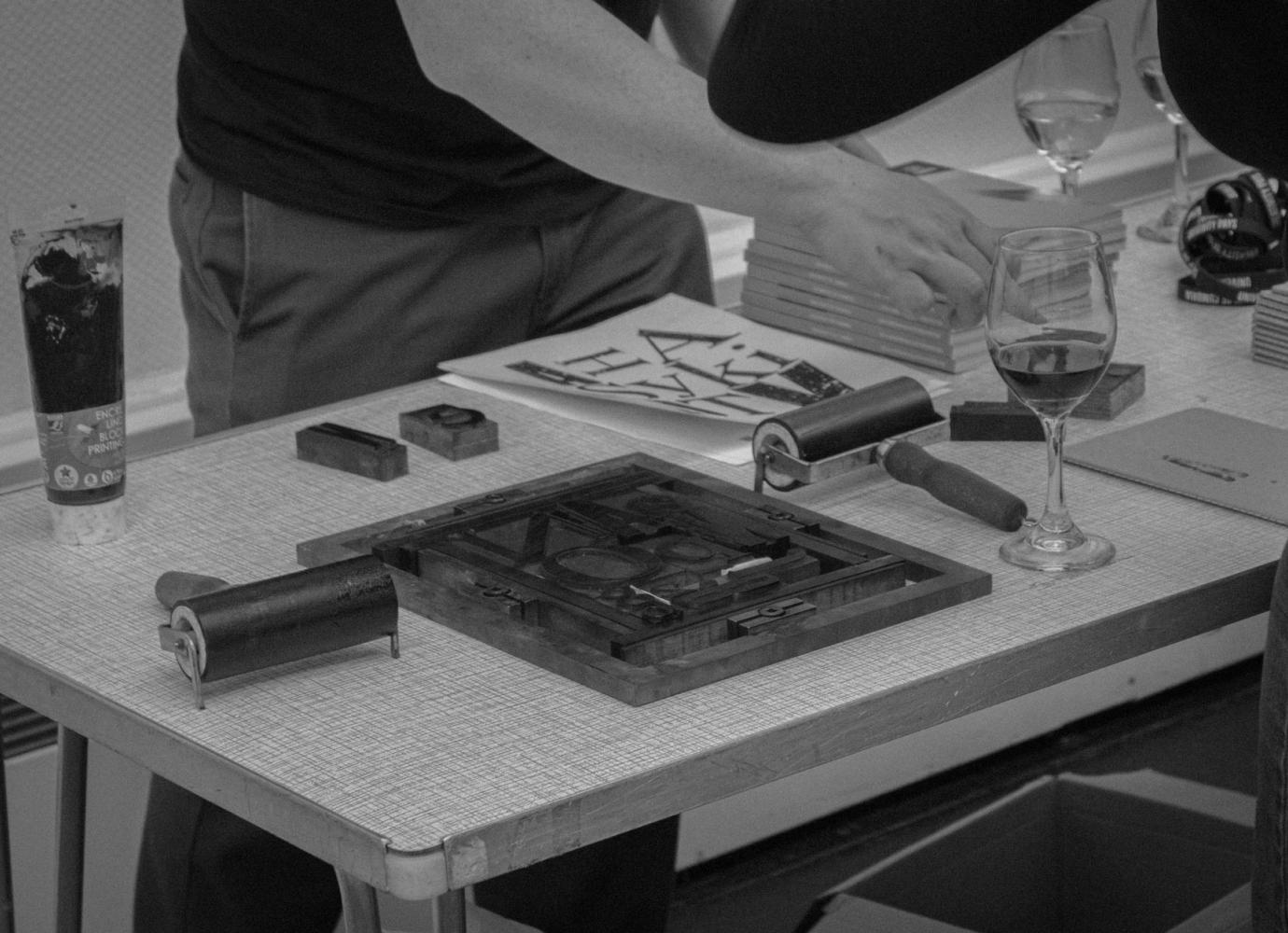
Delegates get to work with type, pick their characters and print something they can actually take home. To keep things focused and achievable, the university gives out sketchbooks rather than large sheets of paper.
"If we pulled out a huge piece of paper, people would want to spend hours printing as much as possible," Vince explains. "The sketchbook keeps it manageable, and it's also part of our course philosophy. Pen and paper are the starting point of design."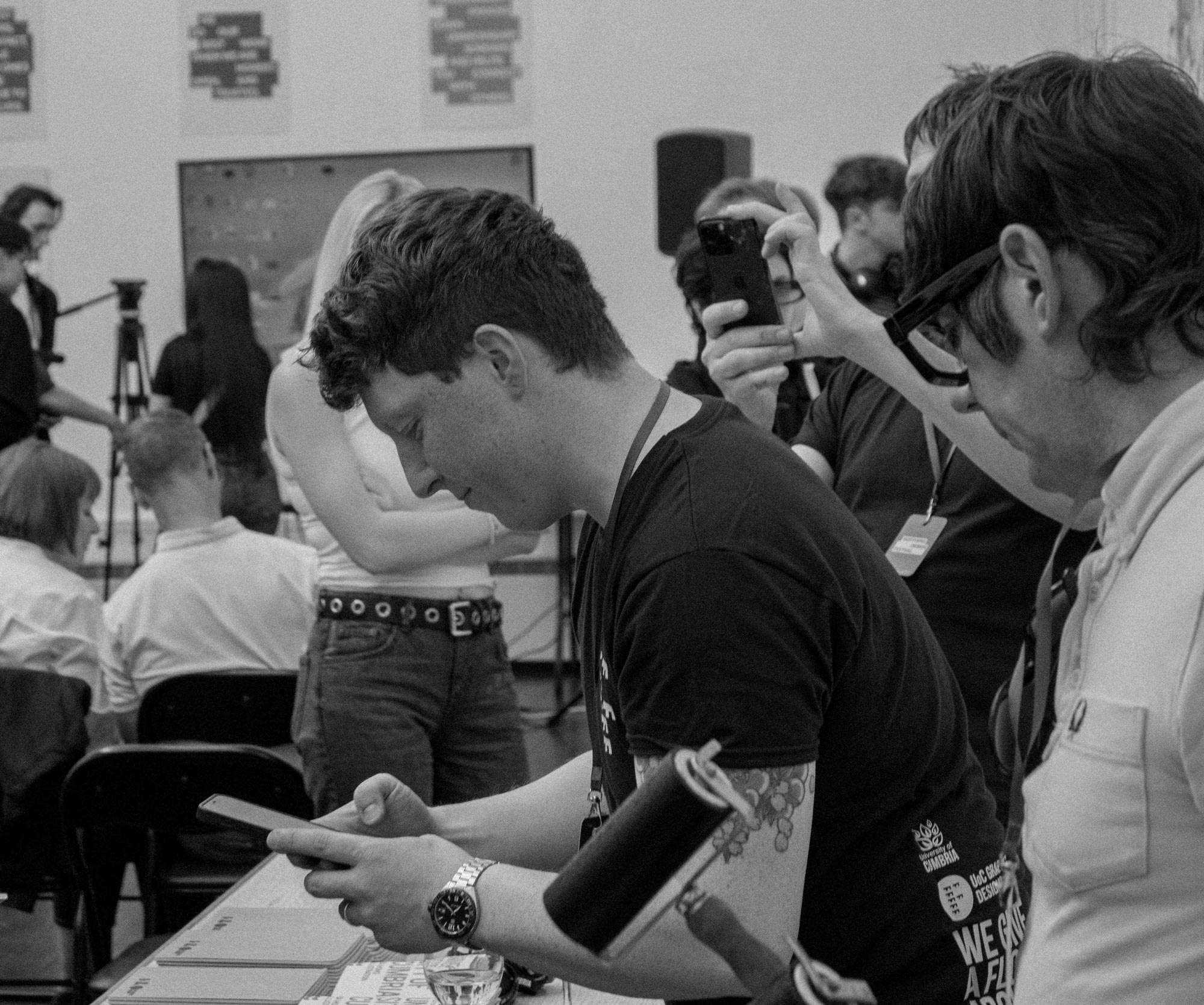
That philosophy runs through everything the University of Cumbria does. The graphic design course is built on craft foundations: sketching, thumbnailing, getting ideas out of your head and onto a page before you go near a screen. Adobe, Affinity, AI, all of that comes later.
"We see digital tools as the last 10%. What holds it all together, the foundations everything is built on, is the idea and how you get there. And honestly, that's the fun bit too."
"The joy is in the process. The final result is a dopamine hit, but figuring out the problem, that's where the real satisfaction lives."
It's a perspective that feels more and more important as AI changes what design production looks like. Vince is hopeful that the industry will find its way back to craft, just as illustration stepped in when clip art ran its course.
Why the University Sponsors NDF
Vince is refreshingly candid about the university's motivations. They sponsor NDF, he says, because it gets their students in the room.
This year, four first-year graphic design students volunteered. One of them asked if she could customise her official festival T-shirt so it felt more ‘her’. Vince told her, of course, she could.
"These little steps are half the reason we get involved. Without us being there as an official sponsor, without my colleagues and me getting involved, some of those students might not have the confidence to go. But we know how valuable it is for them to connect at a grassroots level with something like NDF."
What students get from a live festival environment is something a lecture theatre simply can't replicate: other people's perspectives. Vince is thoughtful about this.
"They can get a lot out of a lecture theatre, but they can only get my opinion or my colleagues' opinions. We aren't the whole industry. At a festival, they get to hear from people whose experience of the world is completely different from mine, and that's invaluable."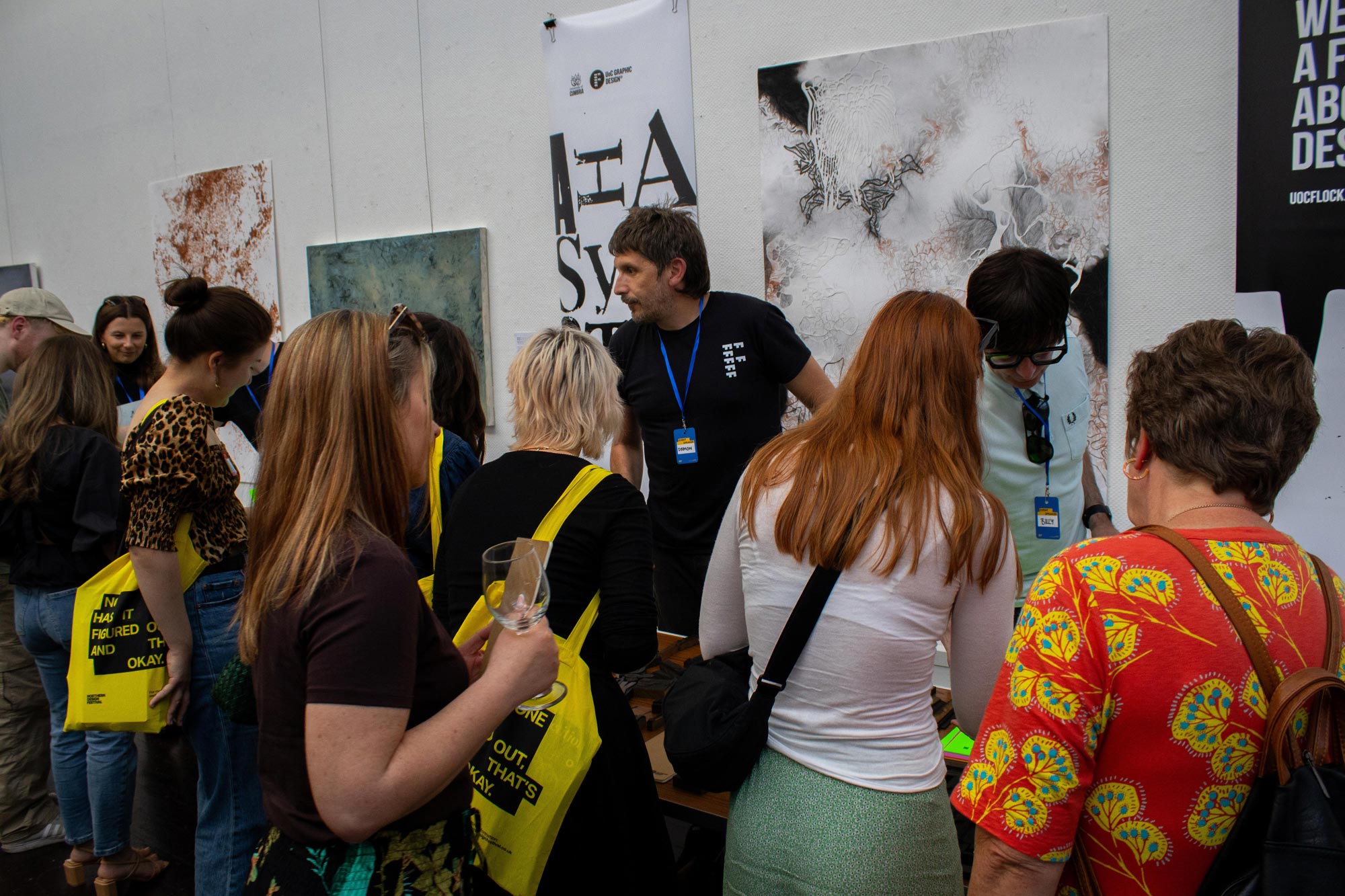
Advice for Young Creatives: Build Your Own Scene
Vince's advice for emerging creatives, particularly those based outside the major cities, is some of the most energising you'll hear.
"You don't need to go to London or Manchester. But if you decide to stay somewhere smaller, you need to be the person who puts on the Northern Design Festival. You need to be the one who invites designers out for a coffee, who drags people out of their comfort zone alongside you."
He speaks from experience. Carlisle doesn't have a huge design scene, but it has one, and Vince has spent years actively building it, reaching out to designers just over the Scottish border, connecting with the small but growing scene in Kendal, making introductions and showing up.
"Great work does get you work. But the person who gives you the work is just as important. You could be the best designer in the world, but if nobody knows you're doing it, nobody can pay you for it."
"You don't need to go to London or Manchester. But if you stay, you need to be the person who builds the scene around you."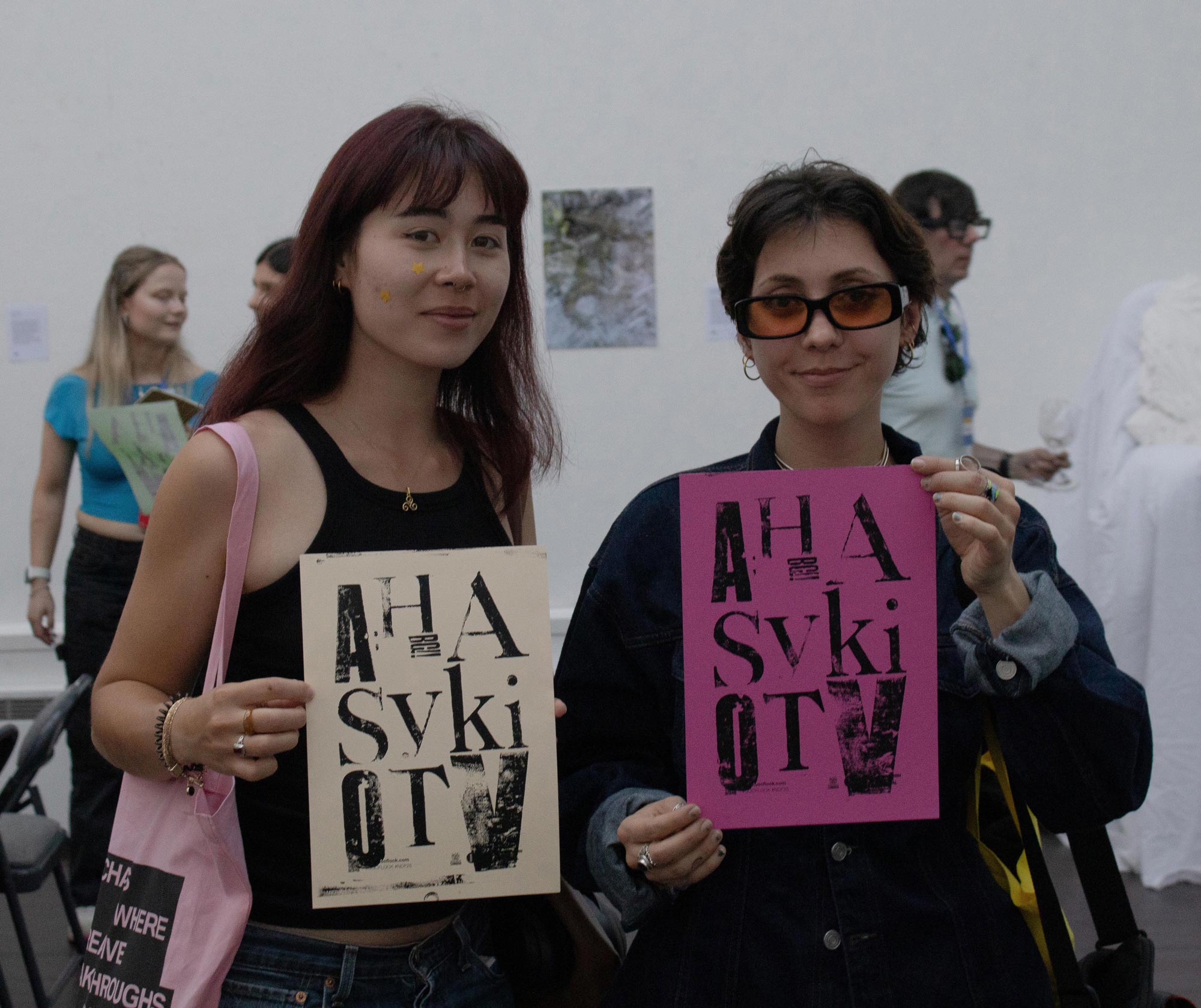
A Campus Built on Heritage
The University of Cumbria's Brampton Road campus in Carlisle has been educating artists and designers since the 1960s, and the university holds the distinction of running the longest continuous fine art course in the country, which began at Tullie House, now Carlisle's city museum.
The campus has something most city-centre art schools can only dream of: space. That means letterpress, screen printing, woodblock, and metal-cast type, all of which require room, equipment, and technicians to run properly.
"We try to keep heritage alive in our practice by using the resources that the space and history of our campus affords us. A tight city-centre campus simply couldn't do what we do."
It's a heritage that feels entirely in step with this year's NDF theme, and with Vince's broader belief that design is, at its heart, a craft worth protecting.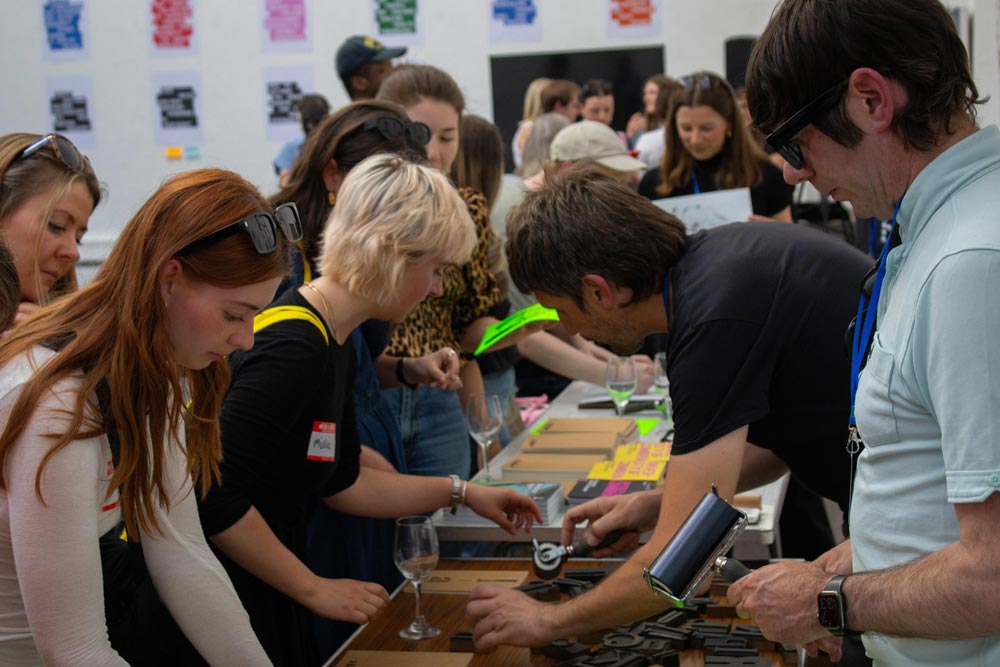
What's Next
Beyond the university, Vince is working to formalise something he has been doing informally for years: a support network for junior designers in Cumbria and beyond. The idea is simple. Young designers often face situations they don't feel confident navigating, whether that's a quoting question, a copyright issue, or just wondering if they're being fairly treated, and they need someone to ask who isn't their boss.
Vince wants to build that into a structured digital tool, starting in Cumbria and expanding into Lancashire and Yorkshire.
It's the same instinct that brought him to NDF in the first place: if something needs to exist and it doesn't yet, be the person who makes it happen.